Roulette in Germany: Navigating Länder Rules for International Players

For the international player, the allure of roulette is timeless, a blend of elegant simplicity and thrilling chance. However, attempting to navigate the German online gambling landscape can feel less like a spin of the wheel and more like a complex legal puzzle. Unlike many jurisdictions with a single, national regulatory body, Germany’s approach is decentralized, governed by a patchwork of state-specific regulations known as Länder rules. This fragmentation creates a unique and often confusing environment for English-speaking enthusiasts seeking access to legal online roulette. Understanding this system is not merely a matter of preference but of compliance, as the rules governing availability, game offerings, and even betting limits can vary significantly depending on the virtual location within the Federal Republic.
The German Interstate Treaty: A Framework of Fragmentation
The foundation of modern German online gambling regulation is the Interstate Treaty on Gambling, a pact agreed upon by all sixteen federal states. While this treaty aimed to create a cohesive market, its implementation has resulted in a regulated but segmented system. A critical aspect for roulette players is the treaty’s stance on virtual table games. The current framework permits online casino offerings, but crucially, the licensing and enforcement powers are delegated to individual states. This means that a gambling operator licensed in Schleswig-Holstein, for example, operates under a different set of supervisory conditions than one licensed in Hesse. For the player, this translates to a market where the portfolio of available roulette games, the software providers featured, and the specific promotional offers can differ from one state-licensed platform to another. International brands like Bet365, LeoVegas, and PokerStars Casino have sought licenses within this system, tailoring their German-facing sites to comply with the stringent requirements of the states where they are permitted to operate.
Key Restrictions Impacting Roulette Play
Several uniform restrictions across the German regulated market directly affect the roulette experience. One of the most notable is the blanket limit on spin speed. Regulators have mandated a minimum spin duration, effectively slowing down the pace of play compared to international standards. This rule aims to promote a more deliberate gambling environment. Furthermore, widespread deposit limits are enforced across licensed platforms, a measure designed for player protection but one that high-rollers must factor into their bankroll management. Perhaps most impactful for the roulette purist is the common prohibition of live dealer roulette games that feature multipliers or bonus side bets, such as Evolution’s popular Lightning Roulette or Extra Chilli Epic Spins. While classic live roulette from providers like Playtech or Pragmatic Play Live is available, these enhanced variants are typically absent from the German-licensed offerings.
Identifying a Compliant Operator
For an international player, verifying the legitimacy of a site is the first crucial step. A licensed operator for the German market will always prominently display its licensing information, typically from a state authority like the Gemeinsame Glücksspielbehörde der Länder (GGL) or the specific regional regulator. These sites will also enforce strict age verification checks upon registration. Players should be wary of platforms that do not ask for robust identification or that claim to operate under vague “EU licenses” without clear German state affiliation. Using a compliant site ensures not only the legality of your play but also access to consumer protection mechanisms and regulated dispute resolution processes, which are absent when using unlicensed offshore platforms.
Accessing Roulette Games Across Different Länder
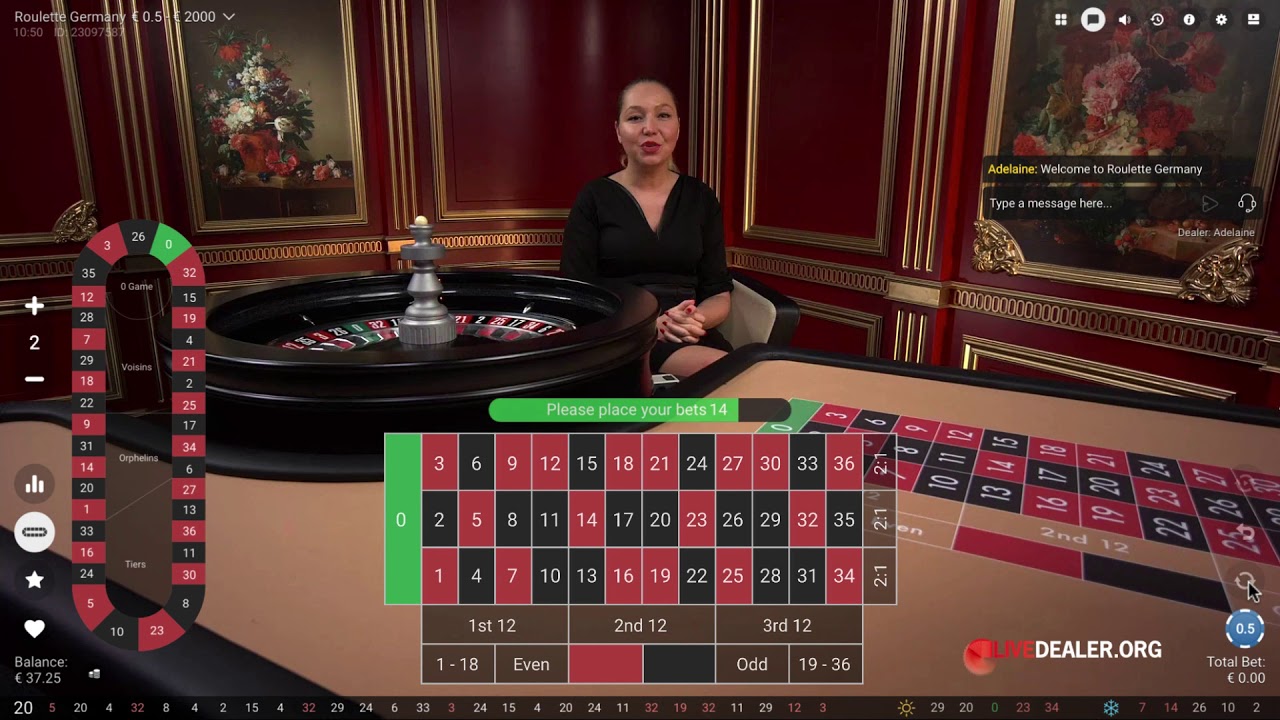
The practical reality of Länder rules means that an English-speaking player logging in from Berlin may see a different selection of roulette games than a player in Munich, even if they are using the same international brand. Operators must geo-locate players and restrict access to their platform based on the specific state regulations of the player’s IP address. This can lead to situations where a popular game like NetEnt’s Roulette Premier or Play’n GO’s French Roulette is available on a site in one state but not in another. The most reliable method for players is to simply check the game lobby of their chosen licensed site; the offerings presented are those compliant with the rules of your detected location. It is important to note that attempting to circumvent these geo-restrictions, for instance by using a VPN, is a direct violation of terms of service and can result in immediate account closure and forfeiture of funds.
State-Specific Nuances to Consider
While the Interstate Treaty sets the baseline, some states have been historically more liberal in their interpretation. Schleswig-Holstein, for instance, once operated a distinct licensing regime and some operators licensed during that period may still hold certain legacy permissions. Meanwhile, states like Bavaria are known for a more conservative approach. These nuances are generally managed behind the scenes by the operators, but they explain why the market feels fragmented. The onus is on the provider to ensure their platform dynamically adjusts to the player’s location, delivering a legally compliant game catalogue at all times.
Strategies for the International Player in a Regulated Market
Playing roulette within the confines of the German regulated market requires a slight adjustment in strategy and expectation. The enforced slower game speed is a significant change. For a player accustomed to the rapid-fire action of an international site, this can initially feel frustrating. However, this mandated pace can be turned to a strategic advantage. It allows for more deliberate decision-making and eliminates the pressure of quick, successive bets. This environment is conducive to strategies like the Fibonacci or Labouchère systems, where bet sizing adjustments are methodical. The absence of high-volatility bonus roulette games also shifts the focus squarely onto traditional European Roulette odds. Players might find more value in refining their understanding of outside bets and managing their bankroll across a longer, more measured session, rather than chasing multiplier bonuses.
Bankroll Management Under Deposit Limits
The prevalence of deposit limits across licensed platforms makes disciplined bankroll management not just advisable but essential. International players used to setting their own monthly budgets must now work within the framework imposed by the regulator and the operator. This requires planning. Before funding an account, review the site’s specific limits on daily, weekly, or monthly deposits. Structure your roulette sessions around these constraints. For instance, if a platform has a strict weekly deposit limit, dividing your intended bankroll across multiple days becomes impossible once that limit is reached. This system encourages a “session-based” approach where a player determines a loss limit for a single sitting, knowing they cannot simply reload beyond the regulated cap.
Choosing the Right Roulette Variant for Your Style
Within the regulated German market, the classic variants dominate. European Roulette, with its single zero, remains the gold standard due to its favorable house edge. This version is universally available across all compliant sites from providers like Evolution, Playtech, and local studios. American Roulette, with its double zero, is less common but can still be found; however, the savvy player will typically avoid it when given the choice due to the higher house advantage. French Roulette, offering rules like “La Partage” or “En Prison” on even-money bets, provides the best theoretical return to player but may not be as widely offered. Your first action on any licensed site should be to explore the roulette lobby to see which of these core variants are present and from which software providers. Sticking to European Roulette is often the most strategically sound decision in this environment.
The Live Dealer Experience in Germany
The live casino sector in Germany is robust but standardized. You will find ample tables for standard European and French Roulette hosted by live dealers from major studios. However, as noted, the exciting game-show-style variants with random multipliers are conspicuously absent. This focuses the live experience on authenticity and tradition. When choosing a live table, consider factors like betting limits that match your strategy, the language of the dealer (many tables feature English-speaking hosts), and the visual and streaming quality. A provider like Evolution ensures a seamless experience, but checking your connection before joining a high-stakes table is always prudent, as the regulated platforms do not allow “Bet Behind” functionalities common elsewhere, meaning you must have a seat at the table to place bets.
Responsible Gambling as a Cornerstone of Play
The German regulatory framework is built upon a strong commitment to player protection, and this ethos must be embraced by every participant. Licensed operators provide a suite of responsible gambling tools, including the aforementioned deposit limits, loss limits, session time reminders, and self-exclusion options. For the international player, actively utilizing these tools is a non-negotiable aspect of engaging with the market. Gambling should always be viewed as a form of entertainment, not a revenue stream. It is vital to set clear time and money limits before you begin playing roulette and to adhere to them strictly. The slower pace of the German-regulated games is designed to encourage mindful play—use that time to reflect on your activity. Should you feel that your gambling is becoming problematic, immediately employ the site’s self-exclusion features and seek professional support from organizations like Gambling Therapy, which offers confidential help in multiple languages. Remember, the true measure of a skilled player lies not in the size of a win, but in the discipline of their play.
